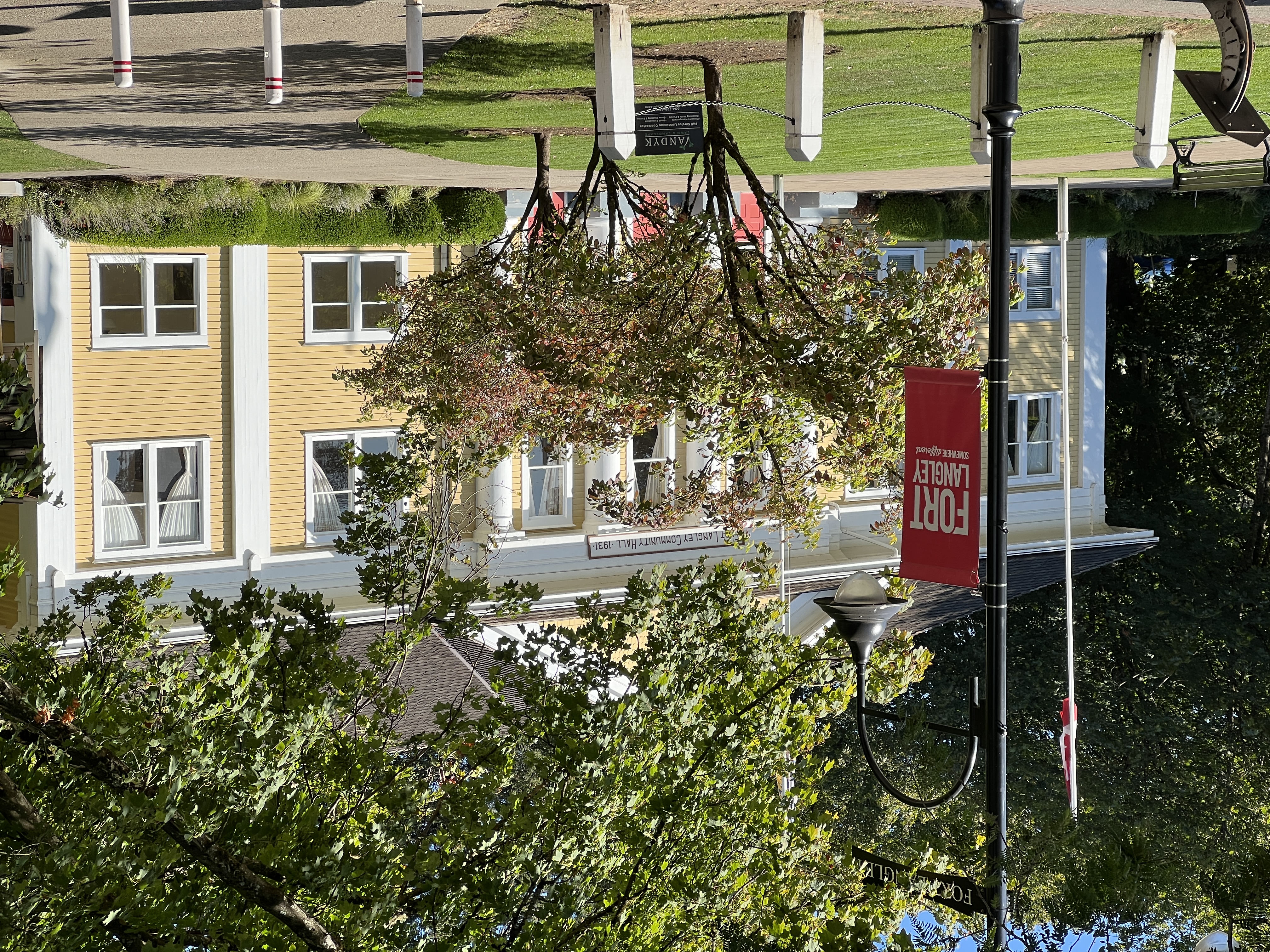
Langley is where Metro Vancouver ends and the Fraser Valley begins. And that position at the region's eastern gateway gives it a character unlike any other municipality in the Lower Mainland. It is the only community in Metro Vancouver where you can live in a heritage village that predates Confederation, buy a half-acre lot for the price of a Vancouver condo, or choose a modern townhome that will be walking distance from a SkyTrain station in two years. The diversity of Langley's offering is its defining strength. And the reason it consistently attracts buyers from across the Metro Vancouver spectrum, from first-time buyers seeking value to established families trading up from Surrey, and from lifestyle buyers who want Fort Langley's irreplaceable village character to acreage buyers who want horses, blueberries, and a view of Mount Baker.
Langley is actually two distinct municipalities: Langley City, a small, dense urban core of approximately 28,000 residents; and the Township of Langley, a vast municipality of approximately 150,000 residents that surrounds the City and encompasses everything from Willoughby's suburban density to Fort Langley's heritage village, Brookswood's large lots, and South Langley's rural estate market.
BC's Birthplace
Fort Langley National Historic Site (1827), where Governor James Douglas proclaimed British Columbia a Crown Colony on November 19, 1858. Over 74,000 visitors annually.
Pricing (2026)
Langley City median $567K. Walnut Grove median $948,900. Detached $1.3M–$1.8M typical. Townhouses $750K–$950K. Condos $450K–$650K. Fort Langley $1.5M–$2.5M+.
SkyTrain Coming 2028
Surrey-Langley SkyTrain terminus at Langley City Centre. The most significant transit infrastructure investment in Langley's history, already affecting property values near the corridor.
Nature & Agriculture
800+ parks. Cranberry and blueberry farms. Equestrian properties. Campbell Valley Regional Park. Derby Reach. Redwoods Golf Course. Golden Ears Provincial Park nearby.
Fort Langley, BC's Birthplace in Depth
Fort Langley deserves its own extended treatment. It is genuinely one of the most historically significant and most charming communities in all of British Columbia, and a place that occupies a unique position in both Canadian history and the Metro Vancouver real estate market. No neighbourhood guide to Langley is complete without understanding Fort Langley fully.
Fort Langley was established in 1827 by the Hudson's Bay Company as a fur trading post on the banks of the Fraser River. The company's first permanent settlement in what is now British Columbia. Named after Thomas Langley, a director of the Hudson's Bay Company, the fort operated as the HBC's primary trading post on the BC mainland for nearly six decades.
On November 19, 1858, inside the walls of Fort Langley, Governor James Douglas read the proclamation that created the Crown Colony of British Columbia, making Fort Langley the literal birthplace of the province. The date is now celebrated as BC Day. Fort Langley National Historic Site was designated in 1923 and is operated by Parks Canada as a living history museum, drawing over 74,000 visitors annually.
The Village Today
The Fort Langley that exists today is one of BC's most carefully preserved heritage communities, a compact village of Glover Road that functions as both an authentic residential neighbourhood and a regional tourist destination. What makes Fort Langley remarkable is not just the National Historic Site itself but the way the entire village has maintained its character through deliberate planning: all new construction in Fort Langley must adhere to strict heritage style guidelines that ensure any new building harmonises with the 19th-century streetscape. The result is a village that feels genuinely cohesive and historically consistent in a way that few BC communities can claim.
Glover Road is the village's main street, a walkable, human-scaled commercial street of independent boutiques, antique shops, galleries, cafés, and restaurants that draws visitors from across Metro Vancouver for day trips and weekend excursions. The Langley Farmers' Market (seasonal, on Saturday mornings) is one of the Fraser Valley's best, set against the backdrop of St. Andrew's United Church. Gasoline Alley (a hidden lane off Glover Road) contains some of the village's most charming small businesses.
The Fort Langley National Historic Site
The reconstructed fort itself, palisaded walls, rough-hewn timber buildings, a working forge, fur press, and period furnishings, recreates life at an 1830s-era fur trading post with extraordinary fidelity. Parks Canada staff in period costume demonstrate barrel-making, blacksmithing, and other trades. The site hosts regular historical reenactments, the annual Brigade Days celebrations in August, and even allows overnight camping within the fort's walls. For families, it is one of the most engaging historical experiences in BC. For buyers considering Fort Langley, the National Historic Site is both the neighbourhood's crown jewel and a permanent guarantee of the area's cultural significance.
Lifestyle, Fraser River, Trails, and Community
Fort Langley's lifestyle is centred on its relationship with the Fraser River and the surrounding natural landscape. Bedford Landing (a waterfront residential development adjacent to the village) provides modern condos and townhomes with direct river access and views. The Langley Rowing Club and Paddling Centre on the Bedford Channel is a hub for rowing, kayaking, and dragon boating. Derby Reach Regional Park, a short drive from the village, preserves the site of the original Fort Langley (1827-1839) and offers exceptional riverside hiking through old-growth cottonwood forest. Kanaka Creek Regional Park is equally beautiful, with salmon spawning in October.
Fort Langley is best explored on foot. The village is compact enough that everything is accessible without a car. But for commuting to Vancouver or Surrey, a car is essential: the nearest major transit connections are in Langley City, 15-20 minutes away by road.
Fort Langley Real Estate
Fort Langley's real estate market reflects its unique combination of heritage character, scarcity, and lifestyle premium. Properties here are among Langley's most expensive and most sought-after. The housing stock is genuinely diverse: beautifully restored Victorian and Edwardian character homes on tree-lined streets; newer heritage-style builds constructed under the village's design guidelines; Bedford Landing condos and townhomes with river views; and larger estate properties on the village's edges.
- Heritage character homes: $1,300,000 – $2,500,000+ depending on condition, lot size, and proximity to the village core. The finest examples are irreplaceable.
- Newer heritage-style homes: $1,500,000 – $2,200,000, built to match the village aesthetic but with modern systems and finishes
- Bedford Landing condos (waterfront): $600,000 – $1,100,000, the most accessible entry point to Fort Langley living, with river views and walkable access to the village
- Bedford Landing townhomes: $950,000 – $1,400,000
- Estate properties on village edges: $1,800,000 – $3,500,000+
- Floating homes and houseboats: Available at the marina, a truly distinctive Fort Langley option
Fort Langley inventory is consistently low, turnover is minimal because residents who arrive rarely leave, and the finite supply of character properties means that well-priced listings attract strong interest regardless of broader market conditions. The village has also become a filming location for numerous commercial productions, TV series, and films, its striking yellow Community Hall and heritage streetscape appear regularly on screen.
"Fort Langley is not a neighbourhood that can be replicated. The history, the river, the village character (and the strict design guidelines that protect all of it) create a genuinely irreplaceable place to live."
The Rest of Langley, Key Neighbourhoods
Willoughby Heights
Willoughby Heights is the Township of Langley's primary growth engine, a rapidly developing suburban community of modern townhomes, detached homes, and mixed-use condos built around Willoughby Town Centre. For young families and first-time buyers, Willoughby offers the newest housing stock in Langley, good school access, parks, and strong community infrastructure at prices that remain competitive with Surrey alternatives.
The future Surrey-Langley SkyTrain terminus at Langley City will make Willoughby significantly more transit-accessible than it is today, and buyers in the Fraser Highway corridor are positioned to benefit from the transit premium as 2028 approaches. Townhouses from $750,000 to $1,000,000; detached homes from $1,400,000. Consistent construction activity means buyers have new options regularly.
Walnut Grove
Walnut Grove is consistently cited as Langley's gold standard for family living, a mature, leafy suburban neighbourhood developed primarily in the 1980s and 1990s, with larger lots than Willoughby, established trees, excellent schools, and immediate Highway 1 access for commuters. The Walnut Grove Community Centre (with pool and library), and the Redwoods Golf Course anchor the neighbourhood's amenity base.
Median price $948,900: Walnut Grove's combination of mature character and school quality commands a premium over Willoughby. Walnut Grove has one of the highest-rated school clusters in the Fraser Valley by Fraser Institute scores, making it a consistent target for school-driven family buyers. Detached homes from $1,300,000 to $1,700,000; townhouses from $800,000.
Brookswood and Fernridge
Brookswood is Langley's neighbourhood for buyers who want genuine space, large quarter-acre (10,000+ sq ft) lots, mature trees, no high-density development, and a semi-rural residential character that feels meaningfully different from Surrey or Burnaby's denser suburban fabric. Brookswood has successfully resisted the kind of densification that has transformed other Langley communities, maintaining its large-lot character through community advocacy and planning restrictions.
Detached homes from $1,300,000 to $1,900,000 depending on lot size and condition. For buyers who want to live on a genuine half-acre within 50 kilometres of Vancouver, Brookswood represents extraordinary value. The neighbourhood is car-dependent but for buyers who prioritise space over transit, this is simply the trade-off.
Murrayville
Murrayville is the Township of Langley's traditional civic core, home to Langley Memorial Hospital, the main RCMP detachment, the school district offices, and Langley Regional Airport. As one of the oldest neighbourhoods in Langley, it offers primarily single detached homes on mature lots, though duplexes and townhouses are present. Detached homes from $1,200,000 to $1,600,000. Murrayville consistently outperforms the broader market by sales-to-active ratio, Murrayville's 34.4% ratio is the highest in Langley, reflecting its established appeal and low inventory.
Langley City
Langley City is the municipality's urban core and its most transit-forward area in 2026, the terminus of the Surrey-Langley SkyTrain will arrive here by 2028, transforming its relationship with the rest of Metro Vancouver. The City already has a walkable downtown (Fraser Highway corridor), Cascades Casino, and a concentration of condos and older townhomes at Langley's most accessible prices.
Median home price $567,000: the lowest barrier to entry in Langley and one of the lowest in Metro Vancouver for buyers who want a future SkyTrain address. Condos from $450,000 to $650,000; newer developments in downtown Langley from $500,000. For investors, Langley City is the clearest transit infrastructure play in the entire Langley market, buying near the future station corridor before the SkyTrain arrives.
Aldergrove
Aldergrove is Langley's most affordable sub-area, a community near the US border with a small-town character, the Greater Vancouver Zoo, Aldergrove Lake Regional Park, and housing prices that represent genuine entry-level value. Detached homes from $1,100,000 to $1,500,000. Popular with first-time buyers and buyers moving from Surrey who want more space. Car-dependent but increasingly attractive as Langley's broader transit picture improves.
South Langley, Rural Estate Country
South Langley encompasses Langley's most rural and prestigious addresses, communities like Campbell Valley, County Line Glen Valley, and the area around the Campbell Valley Regional Park, where properties are often on Agricultural Land Reserve acreage with equestrian facilities, blueberry or cranberry farms, and views across open farmland to Mount Baker. Properties from $2,000,000 to $4,000,000+: a genuinely different market from the rest of Langley, attracting buyers who want estate living on working agricultural land. For horse property buyers in particular, South Langley is one of BC's premier destinations.
The Surrey-Langley SkyTrain, Everything You Need to Know
The Surrey-Langley SkyTrain is a 16-kilometre extension of the Expo Line from King George Station in Surrey east along Fraser Highway to Langley City Centre, with seven new stations. Expected completion: 2028. It is the largest transit infrastructure investment in Langley's history and has already begun reshaping property values along the corridor.
- 168th Street Station: Clayton Heights / Cloverdale border
- 184th Street Station: Cloverdale
- 192nd Street Station: between Cloverdale and Langley border
- 200th Street Station: Langley City western edge
- 208th Street Station: Langley City core
- 216th Street Station: Langley City eastern
- Langley City Centre Station: the terminus, adjacent to Willowbrook Shopping Centre
From Langley City Centre, the journey to downtown Vancouver will be approximately 55-60 minutes, a meaningful improvement over current car commute times of 60-90+ minutes during peak hours. For buyers and investors, the question is which properties along and near the corridor represent the best pre-transit-premium entry points. Properties within 800 metres of future stations, particularly in Langley City and eastern Willoughby, are the most directly positioned to benefit.
Commuting from Langley, The Honest Picture
Langley is Metro Vancouver's furthest eastern municipality from downtown Vancouver, and commuting honesty is essential for buyers evaluating the trade-offs of Langley's value proposition.
- By car (Highway 1 / Trans-Canada): 45-60 minutes to downtown Vancouver off-peak; 60-90+ minutes during morning rush hour from Walnut Grove and Willoughby. Golden Ears Bridge provides a southern route to Maple Ridge and Pitt Meadows.
- By bus (current): Express buses connect Langley to Surrey SkyTrain for onward travel. Total journey downtown: 75-90 minutes. Not competitive with driving for most commuters.
- By SkyTrain (2028): Approximately 55-60 minutes to downtown Vancouver from Langley City Centre. This will be a genuine game-changer for transit-dependent residents.
- Local employment: Langley's own job market is growing, Langley City's commercial core, the Township's industrial and agricultural sector, and healthcare at Langley Memorial Hospital mean a meaningful proportion of Langley residents don't commute to Vancouver at all.
Pricing in 2026
- Condos (Langley City, Willoughby): $450,000 – $650,000
- Townhouses (Aldergrove, Newton adjacent): $650,000 – $800,000
- Townhouses (Willoughby, Clayton): $750,000 – $1,000,000
- Townhouses (Walnut Grove): $800,000 – $950,000
- Detached (Aldergrove, Langley City): $1,100,000 – $1,500,000
- Detached (Murrayville, Willoughby): $1,200,000 – $1,700,000
- Detached (Walnut Grove, Brookswood): $1,300,000 – $1,900,000
- Fort Langley heritage homes: $1,300,000 – $2,500,000+
- South Langley rural estates: $2,000,000 – $4,000,000+
Langley's market in 2026 reflects the broader Metro Vancouver correction, detached homes down 5-8% from peak values, townhouses the most competitive segment with steady demand from young families. Walnut Grove and Murrayville outperform with sales-to-active ratios of 25% and 34.4% respectively. The highest in Langley and indicating tighter supply relative to demand in these established neighbourhoods. Langley City is the clearest long-term investment opportunity: buying near the future SkyTrain terminus before the 2028 transit premium materialises is an argument that applies nowhere else in Metro Vancouver with the same clarity.
Schools, Langley School District 35
Langley School District 35 is one of the Fraser Valley's stronger public school districts, consistently performing above provincial averages, with excellent French Immersion programmes and a strong culture of community involvement in education.
- Walnut Grove Secondary: consistently one of the district's strongest academic performers. Strong IB programme. High Fraser Institute scores.
- R.E. Mountain Secondary: serves Willoughby Heights. Growing rapidly with the neighbourhood's development. Strong performing arts and athletics.
- Langley Secondary: the City's central secondary school, serving Downtown Langley. Strong in trades and academic pathways.
- Brookswood Secondary: serves Brookswood and Fernridge. Strong community ties and consistent academic results in a quieter setting.
- Fort Langley Elementary: serves the heritage village. Small, community-focused school with a loyal parent community. Secondary catchment falls to Walnut Grove Secondary.
- Langley Fine Arts School: a specialist arts school serving SD35 students from across the district with a nationally recognised arts curriculum and the Chief Sepass Theatre.
Who is Buying in Langley?
- Families priced out of Surrey who want more space: Langley's detached home prices often undercut comparable Surrey addresses, and the trade-off of longer commute for more lot and house is a calculation many families make willingly
- Fort Langley heritage enthusiasts: a consistent buyer profile that specifically targets the village, often from across Metro Vancouver, for its irreplaceable combination of history, character, and lifestyle
- Walnut Grove school buyers: families who specifically target Walnut Grove Secondary's catchment, one of the highest-ranked in the Fraser Valley
- Langley City SkyTrain investors: buyers and investors who understand the 2028 transit premium thesis and are positioning ahead of the terminus arrival
- Equestrian and agricultural lifestyle buyers: South Langley attracts a highly specific buyer who wants horse property, working farmland, or acreage estate living within reach of Metro Vancouver
- Brookswood space seekers: buyers who want large-lot suburban living, quarter-acre and above, at prices that would buy a small condo elsewhere in Metro Vancouver
- Retirees from Metro Vancouver: Langley's relative affordability, recreational amenity, and lower density attract retirees from higher-priced communities who want to stretch their equity further
Is Langley Right for You?
Langley suits buyers who are willing to accept longer commutes to Vancouver in exchange for more space, a more relaxed pace of life, better value per dollar, and (in Fort Langley's case) a genuinely irreplaceable community character. It is not the right choice for buyers who need frequent, fast transit to downtown Vancouver or who prioritise urban amenity and walkability. But for the buyer profile that fits Langley's strengths, it offers one of the most compelling overall propositions in Metro Vancouver. And the 2028 SkyTrain arrival will permanently improve its transit case.
Fort Langley deserves special mention for buyers who have not visited: spend a Saturday morning there before making any Langley property decision. Walk Glover Road, have coffee at one of the village cafés, visit the National Historic Site, walk down to the river. Many buyers who were "just looking at Langley" discover Fort Langley and change their entire property search as a result.
I would be pleased to walk you through Fort Langley's heritage property market, the SkyTrain corridor investment case, and the Walnut Grove school catchment implications for any Langley neighbourhood you are evaluating. Contact me at 778-995-7224 or harry.kramm@evrealestate.com.
You may also be interested in my guides to Surrey, Burnaby, and Coquitlam.